


Expert Advice on Achieving Site Efficiencies
By Meline Beach
Beyond energy savings, newer equipment and proper maintenance reduce downtown.
Rising energy costs, labour pressures and evolving customer expectations are driving retailers to seek greater efficiencies in every aspect of their business.
Achieving site efficiency isn’t as simple as a single upgrade. It involves multiple systems working together, supported by innovative applications and proactive maintenance. To understand where efficiencies are gained, or lost, in the convenience and gas (C&G) channel, six industry experts across refrigeration, POS and lighting share their insights.
Refrigerated Systems
For many C&G operators, refrigeration can account for high energy use but can also represent one of the biggest opportunities for energy savings.
Chris Midbo, head of sales, marketing and new business development at Western Refrigeration, notes that outdated equipment is a common challenge. “We see a lot of older sites with outdated equipment,” he says, “But innovations like environmentally friendly refrigerants, LED lighting, upgraded components and modern designs can help operators meet current energy regulations while improving efficiency and reliability.”
Beyond energy savings, newer equipment and proper maintenance reduce downtime. “If you consider the loss of sales from downtime due to equipment breakdown, the cost can be significant,” says Midbo. “Fewer breakdowns mean more consistent operations and less disruption during peak periods.”
Store layout also drives efficiency. Proper flow reduces bottlenecks in aisles, eases staff and vendor activities and enhances product visibility. “A well-designed walk-in cooler makes day-to-day responsibilities safer and more efficient,” says Midbo.
Johnny Wood, national sales manager – c-stores at KPS Global, emphasizes that efficiency often depends on how staff and customers use equipment. “Site efficiency starts with ensuring equipment is operated as designed,” he says. Self-closing refrigeration doors maintain temperature, but leaving them open, even briefly, forces equipment to work harder. This can cause condensation and icing issues, reduced HVAC and refrigeration performance and accelerated wear, creating safety risks, such as slip-and-fall hazards. Deferring maintenance can quickly escalate into major failures and expensive repairs.
“Replacing worn doors or frames can significantly improve thermal efficiency, restore proper sealing and help refrigeration systems run consistently,” says Wood.
Tracking both refrigeration costs and equipment performance over time can help measure site efficiency. “Consistent energy usage usually indicates equipment is functioning as intended,” says Wood. “Spikes in consumption may signal struggling equipment, doors left open or overdue maintenance. Monitoring trends lets operators spot issues early and fix them before they become costly problems.”
Both Midbo and Wood stress proactive maintenance and targeted upgrades to extend equipment life, reduce energy costs and protect product integrity. This includes door replacements, thermal liner panels and monitoring systems, including smart controls that provide real-time visibility into temperature and humidity. Overall, they recommend using OEM-approved parts and trained service providers to avoid unnecessary costs and performance issues.
POS
POS efficiency protects time for both customers and staff.
Kevin Wang, operations manager at Wiz-Tec Computing Technologies, defines site efficiency as throughput. “A system that’s easy to use, reliable and fully integrated means fewer unnecessary steps, simpler processes and better overall performance,” she says.
Mismatched or poorly integrated systems often create some of the biggest inefficiencies.
“Adding third-party or standalone systems to connect pumps, POS and back-office functions can create obstacles and complicate workflows,” says Wang. “It slows routine tasks, adds operational strain, requires extra training, increases the risk of errors and ultimately hinders overall site efficiency.”
According to Wang, a typical return on investment for integrated platforms that reduce manual inputs, speed up transactions and checkout lines and simplify labour management, is 18 to 24 months.
Elie Y. Katz, president and CEO of National Retail Solutions, frames efficiency as “the fluidity of the entire location, from forecourt to front counter to back office.” He says it comes down to friction. “How fast can a customer move from the pump to the road? How many workarounds do staff need to complete a transaction? How tightly are you controlling inventory and pricing across fuel and the store?”
According to Katz, fragmentation is the biggest pain point. Fragmented systems force staff to rekey data and manually update prices on shelf labels, POS systems and fuel pumps, often resulting in mismatched pricing, transaction errors and frustrated customers.
Modern POS upgrades focus on integration, linking fuel, in-store sales, payments and back-office reporting into a single platform. Features like pay-at-the-pump and preauthorized payments reduce in-store congestion, improve labour efficiency and support accurate pricing. Both Hassell and Katz agree that POS is the operating system of the site, and true efficiency comes from integration, not patchwork solutions.
Lighting
While energy savings usually drive lighting upgrades, smart design and long-term planning are equally important.
Rudy Ponce, owner of OPTECHA, defines site efficiency as “an optimized process where all aspects, including design, budgets, construction and end-user requirements, are considered.” He emphasizes that lighting efficiency starts with design, not procurement, because poor planning can lead to the wrong fixtures, incorrect light levels, budget overruns, and warranty issues.
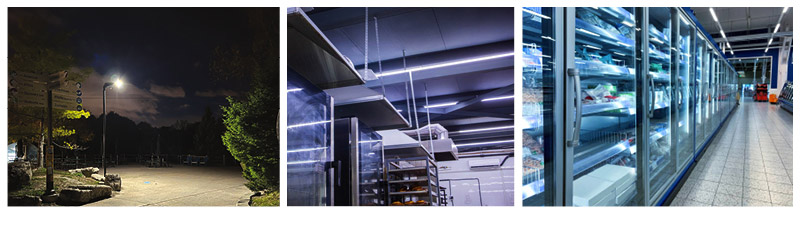
“Well-designed lighting lowers energy costs, reduces maintenance, improves safety, boosts productivity, and enhances the customer experience,” says Ponce, who approaches lighting as a complete system, managing design, installation, and maintenance to ensure long-term efficiency. “Upgrades such as LED lighting with automated controls for occupancy sensors, dimming, and scheduling, deliver optimal results when aligned with actual space use.”
Dave Bowen, president of Roctan 2000, cautions that while LED conversions have delivered significant savings over the past decade, many early systems are now reaching the end of their lifecycle. Failed drivers and circuit boards, often outside warranty coverage, can require full fixture replacements, generating unexpected costs, installation challenges and operational disruption.
Bowen highlights innovative Canadian-made technologies, including amplification lighting and advanced solar LED systems, that address both energy and maintenance challenges. These solutions reduce dependency on drivers and complex electronics, simplify maintenance, and, in some cases, eliminate energy costs, particularly for exterior lighting.
“Return on investment varies by the baseline system,” says Bowen. “Sites still using fluorescent or HID lighting may see strong returns, while LED-to-LED replacements require a nuanced evaluation that considers energy savings, maintenance, longevity, and operational disruption.”
Ponce and Bowen offer complementary insights on design, lifecycle planning, maintenance, and emerging technologies, highlighting the value of specialized lighting partners who manage systems from design through ongoing performance to maximize site efficiency.
Proactive, Integrated and Fit-for-Purpose
Thoughtful design, proper integration, and proactive maintenance drive efficiencies across refrigeration, POS and lighting—not isolated upgrades or reactive fixes.
Investing in newer refrigeration without addressing door discipline undermines performance. Upgrading POS hardware without integrating payments and pumps creates bottlenecks. Installing lighting without a plan can inflate costs and reduce effectiveness.
As Midbo puts it, “Don’t be afraid to invest in your business. The return is cost savings and, more importantly, increased sales.”
C&G operators seeking greater site efficiency should ask themselves three questions: Are systems working together? Are staff using them correctly? Are small issues fixed before they become costly problems? Answering yes across all three areas leads to lower costs, smoother operations and better customer experiences.
Meline Beach is a Toronto-based communications practitioner and frequent contributor to Convenience and Carwash Canada. In addition to freelance writing, Meline provides communications and public relations support to businesses across Canada. She can be reached at www.mlbcomms.ca.