


From Gas Station to Signature Destination: Daniel’s Market Transformation
By Meline Beach
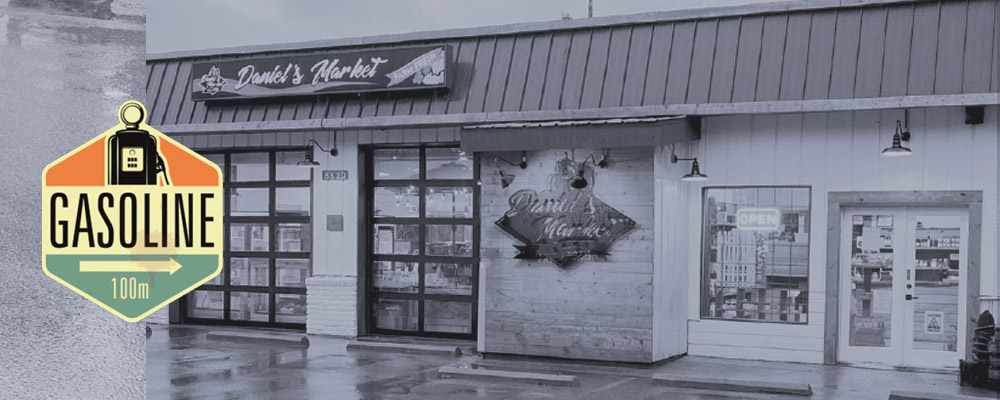
Located near Victoria, British Columbia, Daniel’s Market is a Chevron-branded dealer (formerly Esso, and before that, Shell) that has reimagined what a convenience and gas (C&G) station can be. After relentless price competition from Costco put significant pressure on gas stations across Vancouver Island and the site lost its tenant, Daniel Tsai stepped in with a deliberate focus on reinvention — repurposing underused space, rethinking the site’s role in the community and refining a disciplined business strategy to drive traffic, loyalty and long-term growth. With an Ivy League MBA and a background as a business professor, Daniel applied his training to save the site from bankruptcy, overseeing the conversion of its c-store, legacy automotive space and garden centre into a year-round farmers’ market. The transformation helped redefine Daniel’s Market as a destination rather than a pit stop, attracting hundreds of thousands of visitors every year. To explore how this transformation took shape and what other C&G retailers can learn from it, Convenience & Carwash Canada spoke with Tsai and Kyle Adam, account manager at Sunoco.
History and transformation
Can you tell us the history of Daniel’s Market and the legacy space that became part of it? What inspired the transition from a garage to retail?
KA: Daniel came on board and transitioned the station from a Shell-branded dealer to Esso in 2021. During that period, he and his team worked tirelessly to expand the store’s backcourt offerings and build the brand that is now Daniel’s Market. The success of Daniel’s Market inspired both Daniel and me to introduce our Chevron offering, pairing high-quality fuel with the JOURNIE Rewards program to further enhance the Daniel’s Market experience.
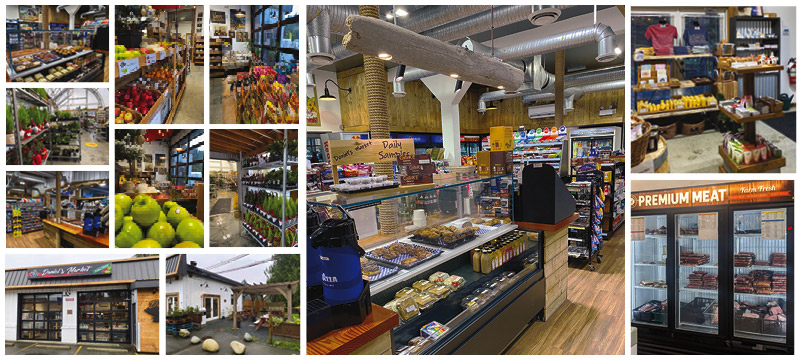
DT: Before becoming part of Daniel’s Market, the garage housed a microbrewery for several years, and before that, it operated as a mechanic’s garage for decades. As Daniel’s Market grew, we needed the space to expand our retail footprint. Integrating the garage allowed us to create a seamless shopping experience and support the direction the business was already heading. We integrated the c-store into the farmers’ market, highlighting local and higher-end products, and added a bakery, deli, meat and seafood counters, a gift shop, health and beauty items, and fresh produce. As the market grew in popularity, the range of offerings kept expanding.
What challenges did you face converting the garage into retail, and how did you weigh the risks?
DT: We originally built a prefabricated, engineered steel and fabric structure for Daniel’s Market, which had high ceilings and an open, barn-like feel—but it wasn’t insulated, making winter shopping uncomfortable. Converting the garage into retail space and integrating it with the original c-store made more sense than building a new structure. While the project required planning – outdoor seating, layout for groceries, bakery, meat, seafood, deli, dairy, coffee, and a prep kitchen—it was far more cost-effective than starting from scratch. We self-financed the entire project without bank or government support, which gave us full control.
Projects of this scale require approvals and patience, along with reliable contractors. There’s a learning curve, but once you’ve done something once, you can refine the process and avoid unnecessary issues. Trial and error played a role in getting us where we are today. Strategically, I also had a clear vision to create a destination shopping experience that excited customers every time they visited, with new and local products and exceptionally friendly service.
Retail and market strategy
How does the farmers’ market complement your fuel and convenience business?
DT: Daniel’s Market elevates the c-store into a destination shopping experience that offers a range of products and isn’t a run-of-the-mill business. Instead, the farmers’ market features general merchandise and local and artisan products, including ice cream, freshly made soups, salads and sandwiches, groceries, premium coffee, and a gift shop with jewelry, health and beauty items, arts, and crafts. Retail and grocery offerings complement our fuel services, making us a one-stop destination. These offerings are synergistic and drive demand and sales. Customers may come for gas, gifts, or food and groceries – but many end up using all three.
We have a formula that works. We also rely on data analytics, constantly innovate, and are not afraid to experiment or fail fast to succeed. To borrow a term from the tech industry, Steve Jobs made “Think different” Apple’s mantra. That’s the approach we take at Daniel’s Market, combining creativity with continuous improvement.
Why the strong focus on Canadian-made and locally sourced products?
DT: We embraced “Buy Local” and “Buy Canada” more than a decade ago – well before recent geopolitical trade issues. Customer awareness has since caught up, and today shoppers actively look for product origin. Supporting local and Canadian vendors isn’t just good business; it strengthens the community and gives customers meaningful choices.
How do you manage vendor relationships and supply consistency?
DT: Early on, finding vendors and local farmers to supply us meats and produce was challenging. Today, it’s the opposite. Because people know what our brand stands for – local, quality products and strong customer service – vendors now approach us to be part of Daniel’s Market.
What operational lessons did you learn about running a farmers’ market within a convenience environment?
DT: Operating Daniel’s Market requires a completely different mindset than a traditional c-store. You can’t rely on a cookie-cutter or franchise model. Success demands education, creativity, a willingness to invest, and the ability to learn from mistakes. This is why big chains struggle to replicate what we’ve done – the commitment level is very different. The reward, however, is a truly transformative business.
Have you seen measurable impacts since expanding the market concept?
DT: Yes. We’ve seen a dramatic increase in sales, foot traffic, longer shopping times, and larger basket sizes since expanding Daniel’s Market and increasing our retail space. The success is reflected in customer loyalty, repeat business, reputational benefits, and the ability to attract great employees to our business.
Community and customer engagement
How has this transformation affected community perception and loyalty?
DT: We’ve won Business of the Year from our local Chamber of Commerce and built a strong and large social media following. The community recognizes what we stand for.
Your social media presence is very active – what’s the secret?
DT: We post almost every day. The creative process is our secret sauce. We focus on content that’s informative, entertaining, and aligned with our values, while highlighting what we’re doing for the community. Most importantly, we understand our customers.
How do you engage the community beyond social media?
DT: We create experiences that bring families into the store. This past summer, we hosted “Daniel’s Days,” featuring Disney-like character performers, live music, magicians, giveaways, and fundraising for causes like the local food bank. We also donated 1,129 ice cream vouchers to local students for Christmas and were the first retailer to bring Kawartha’s Ice Cream to western Vancouver Island. Daniel’s Days was a hit, and there are tentative plans to make it an annual tradition. These initiatives strengthen loyalty, showcase our values, and make Daniel’s Market a true community hub.
Advice and future plans
What advice would you give other C&G operators considering a similar move?
DT: If you stick to the franchise formula, you limit your growth. You can’t build a better business by selling more pop and chocolate bars alone. Innovation requires investment, sacrifice, and the willingness to take risks and do things differently – but the upside is significant. You must be prepared to learn and to do the work. We’re also available for consulting for operators and retail chains who want guidance to enhance operations, improve their marketing and social media presence, and increase their profits.
Any final insights?
DT: Success comes from understanding customers and delivering experiences and products they want – or didn’t know they needed. We’re willing to sacrifice profit and margin to build trust and long-term loyalty, knowing customers will come back.
How many Daniel’s Market locations are there today, and are there plans to expand?
KA: Currently, there is one Daniel’s Market location. That said, Daniel and I are actively working together to identify the right expansion opportunities. With strong brand recognition in Vancouver, the initial focus is to expand across the island. Expansion into other parts of British Columbia, including the Lower Mainland, is a longer-term goal as suitable opportunities arise.
Meline Beach is a Toronto-based communications practitioner and frequent contributor to Convenience and Carwash Canada. In addition to freelance writing, Meline provides communications and public relations support to businesses across Canada. She can be reached at www.mlbcomms.ca.