




How to Prevent Skimming on PAX Handheld Devices in Convenience Stores, Bodegas, and Gas Stations

By Elie Y. Katz
Payment-card skimming remains one of the most persistent threats facing small retailers. Compact, customer-facing terminals – such as popular PAX handhelds used at counters and windows – are convenient for fast checkout.
Still, their size and visibility can also make them attractive targets for criminals who attach surreptitious overlays or hide deep‑insert skimmers in the card slot. The good news: With disciplined routines, a few configuration choices, and the right partner, you can substantially reduce your risk.
Know what a skimmer looks like on PAX devices
On PAX S‑series and handheld units, an external overlay will typically make the reader look slightly “off”: bulkier than usual, with seams that don’t align, or a card entry that sits a hair out of center. Gentle pressure may reveal wobbly parts because overlays are often affixed with tape or glue. Some attacks add a thin keypad shell to capture PINs or place a tiny pinhole camera near the screen to film keypad entry. If you notice glue residue, mismatched plastics, broken seals, or anything that feels different, stop and inspect before proceeding with any further transactions.
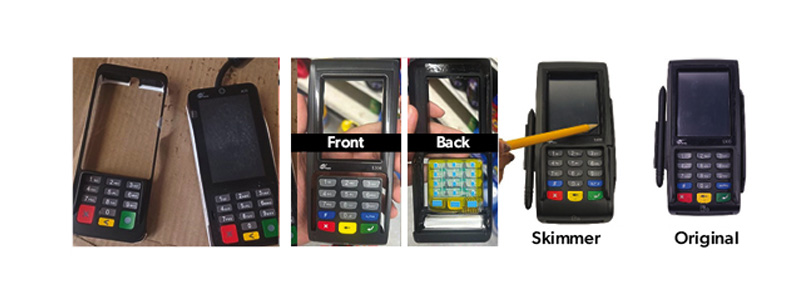
Build a 60‑second inspection habit (every shift, every lane)
Make terminal checks as routine as counting cash drawers.
- Look & feel: Compare each device to a reference photo. Check for misaligned graphics, odd edges, or thicker‑than‑normal housings. Lightly tug the reader bezel and keypad; legitimate assemblies feel solid.
- Card‑insert test: If cards now require unusual force or the slot “feels different,” power down and investigate.
- PIN privacy: Scan for unusual objects or tiny holes pointed at the keypad area; cover your own hand as a demo when training staff.
- Seals & screws: Confirm tamper labels are intact and screws show no tool marks. Document with a timestamped photo at each shift change.
Harden your checkout area.
- Placement: Keep terminals inside the clerk’s line of sight—never unattended on the customer side of a divider or attached by long cables that can be moved out of view.
- Mounting: Use lockable cradles or short, secured tethers; criminals avoid targets that take time and tools.
- Cameras and lighting: Aim one store camera at each payment station. Visible deterrence matters and recorded footage helps investigators if an incident occurs.
- Access control: Restrict who can remove or service devices; keep a log of serial numbers and locations.
Prefer safer payment methods – and configure devices accordingly.
Encourage EMV chip and contactless (“tap”) transactions; both sharply reduce the value of skimmed magnetic‑stripe data. Where your processor allows, minimize mag‑stripe fallback and require chip/tap when a chip is present. Train cashiers to politely ask customers to shield the keypad with a hand when entering PINs (post a small sign to normalize the behavior). Note that EBT cards are often still mag‑stripe‑based; that makes shielding PIN entry and visual inspections especially critical for stores serving EBT customers.
Mind the signals—without chasing ghosts
Some modern skimmers use short‑range radios to exfiltrate data. If you suddenly see unfamiliar Bluetooth names clustering around a single lane – and other checks also look wrong—treat it as a corroborating signal and investigate. (Bluetooth “noise” alone isn’t proof; use it to reinforce your physical findings.)
Keep software and firmware current
PAX terminals ship with strong security features and are designed to meet PCI requirements, but no device remains secure with outdated code. Schedule updates during low‑traffic hours, apply manufacturer and processor patches promptly, and disable unused ports and default credentials.
Have a clear response plan.
- If you suspect tampering:
- Power down and remove the terminal from service;
- Do not peel off any overlay – treat the device as evidence;
- Call your processor’s security line and local law enforcement;
- Preserve relevant video clips;
- Document terminal ID, last‑known good inspection, and staff on duty;
- Follow guidance on customer notifications and dispute handling. A fast, documented response limits losses and speeds reimbursement investigations.
Why partnering with NRS puts independents a step ahead
National Retail Solutions (NRS) focuses on the needs of independent convenience stores and bodegas that may not have corporate security teams. NRS leadership has publicly emphasized rigorous daily inspections, staff training, and rapid-escalation procedures—and equips merchants with practical, store‑friendly checklists that help these habits stick.
NRS advocates operational discipline that prevents fraud in practice. For many small retailers, that combination of hardware, software, and hands‑on guidance is the difference between “hoping” you’re secure and knowing you’re running a defensible process.
A one‑minute script you can implement today
- At open and shift change: Inspect, tug‑test, and photo‑log each terminal.
- During rushes: Keep eyes on devices; remind customers to chip/tap and shield PINs.
- At close: Verify seals, reconcile logs, and stow handhelds in a locked area.
Skimming thrives on complacency. By combining visible physical checks, smart device configuration, and a practiced response plan – supported by a partner like NRS that champions merchant‑friendly security –you make your PAX handhelds hard targets and protect the trust your community places in your counter.
Visit our website to learn more about our products, services, and reseller opportunities, or call us at 833-289-2767.
Elie Y. Katz is the president and CEO of National Retail Solutions (NRS), which operates thousands of point-of-sale terminals across the United States and Canada, offering NRS Pay credit card processing and business cash advance funding to small and mid-sized independent retailers. For more information, visit nrsplus.com or call (888) 541-1073.