


In-Floor Heating in Carwashes: The System You Never See – But Always Feel
By Axel Foley
In-floor heating is one of those systems customers rarely notice — unless it’s missing. For operators in northern climates, it is not a luxury feature or a comfort upgrade. It is core infrastructure. In states across the Upper Midwest, Great Plains, Northeast, and into Canada, winter conditions can define whether a carwash runs efficiently or fights daily operational chaos.
For carwash professionals, particularly those operating in-bay automatics and self-serve locations, radiant floor heat directly impacts safety, throughput, chemical performance, structural longevity, and brand perception. When temperatures drop well below freezing for weeks at a time, the slab beneath your wash bays either works for you — or against you.
How In-Floor Heating Actually Works – A Crash Course
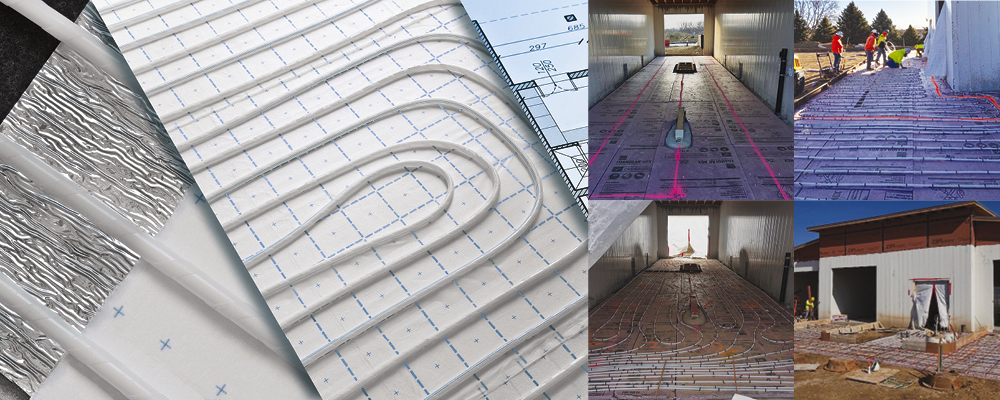
Most modern carwashes in the northern climates use in-floor heat. Before the concrete slab is poured, cross-linked PEX tubing is laid in carefully designed loops throughout the wash bay floors, mechanical rooms, exit aprons, entrance aprons and customer walkways. Typically, the colder the climate is, the closer the tubing is spaced together near entry doors, exit aprons, and trench drains, where ice formation is most likely.
A boiler heats water or a water-glycol mixture, and pumps circulate that heated fluid through the tubing embedded in the slab. Rather than heating air, the system warms the concrete itself. The slab then radiates heat upward, keeping the surface temperature above freezing. Snow, slush, and standing water evaporate instead of turning into hazardous ice.
The key difference between forced air or radiant tube heating is thermal mass. With in-floor heating the concrete becomes a heat reservoir. Even when bay doors open repeatedly, quickly releasing the heated air, heated slabs retain warmth and recover bay heat quickly and efficiently. That stability is something forced air systems simply cannot provide.
Why Floor Heat is Essential in Northern Markets
In regions where winter stretches for four to six months, water management becomes a constant battle. Every vehicle entering the bay brings snow-packed wheel wells, ice clinging to undercarriages, and road salt dripping from frames. Add overspray and rinse water, and you have a perfect recipe for frozen floors.
Without in-floor heating, operators often rely on manual ice control methods or water weeping methods. Rock salt, calcium chloride, and labor-intensive scraping become part of daily routines. In instances using weep, constant water trickling through equipment quickly doubles or triples already increasing water costs. Not only does this create operational drag and inefficiency, but it also introduces corrosion risks to equipment, drains, and concrete. Over time, freeze-thaw cycles expand cracks, weaken slabs, and shorten the life of trench and drain systems.
From a liability standpoint, the risk multiplies. Slip-and-fall incidents become far more likely when wet concrete meets freezing air. In self-serve bays especially, customer exposure to potential injury is substantial. In a world where insurance premiums are already at an all-time high, limiting these claims is a must. Heated slabs dramatically reduce that risk by keeping surfaces consistently dry and slip free.
There is also the issue of uptime. Ice buildup can force temporary closures, slow vehicle throughput, freeze door tracks, and block drains. In many northern markets, winter is peak revenue season. Losing even a few cars per hour or closing temporarily due to icy conditions can quickly erode thousands of dollars in revenue over the course of a season.
Operational Advantages Beyond Ice Prevention
The most obvious benefit of in-floor heating is safety, but there are several secondary advantages.
First, throughput improves. Vehicles can enter and exit more smoothly when surfaces remain dry. Doors cycle more reliably when ice doesn’t build up around thresholds. In-bay automatic operators, where efficiency per hour directly impacts profitability, often see measurable winter performance improvements with heated slabs.
Second, structural protection is significant. Concrete deteriorates rapidly under repeated freeze-thaw cycles and salt. Radiant heat reduces expansion stress inside the slab and limits long-term cracking. While the upfront cost is sometimes tough to swallow, the life-extension value can offset part of that investment over decades of operation. I have been to sites that are still operating with the same floor heating tubing from 30 years ago.
There is also a brand component. Even though your customers may not see your radiant heat, they notice clean, dry, professional-looking facilities. An icy, salted bay feels very different than one that appears safe, controlled and well maintained.
The Real Costs and Challenges
Despite its advantages, in-floor heating is not without drawbacks. Installation costs can add a substantial amount to a build budget, particularly in large footprints. Floor heating systems require boilers, pumps, controls, insulation beneath the slab, and thoughtful engineering. For retrofits, the expense often becomes prohibitive unless the slab is already being replaced.
Maintenance and repair present another challenge. Once the tubing is embedded in concrete, access is limited. Although PEX is durable and designed for longevity, installation errors, slab punctures during construction or equipment installation, or neglected fluid maintenance can create long-term problems. Leak detection may require thermal imaging, and repairs can involve cutting into the slab.
Energy consumption is another consideration. Boilers must run consistently during prolonged cold spells, particularly in climates where subzero temperatures persist. Poor system design, undersized boilers, lack of insulation beneath the slab, or improper zoning can dramatically increase operating costs. A poorly designed system may underperform while still consuming gas at high rates to the operator.
Design mistakes are particularly expensive because they are permanent. Tubing spaced too far apart will never deliver adequate surface heat. Lack of insulation beneath the slab allows heat to dissipate into the ground. Inadequate glycol mixtures can introduce freeze risks within the tubing itself. For this reason, proper engineering and experienced installation are critical.
When Is It Worth the Investment?
In southern markets where freezing temperatures are rare and short-lived, in-floor heating may not provide meaningful return on investment. Short ice events can often be managed with alternative strategies.
In northern territories, however, it is often best viewed as essential infrastructure rather than an optional upgrade. For high-volume in-bay automatics and self-serve bays in the Midwest and beyond, radiant floor heat protects revenue, reduces liability exposure, improves operational stability, and extends structural lifespan.
Ultimately, winter reveals operational weaknesses. Drainage flaws, door design limitations, chemical inconsistencies, and equipment vulnerabilities all become more pronounced when temperatures plunge. Radiant floor heat does not eliminate winter challenges, but it removes one of the most disruptive variables: frozen surfaces.
For carwash professionals building new sites in cold climates, the conversation should not be whether radiant heat is needed. It should be whether the business can afford to operate without it.
When temperatures drop below zero and peak season is underway, your slab is either working with you — or working against you. So, while southern operators debate shade structures and water reclaim temperatures, northern operators know the truth: If your floor isn’t heated, you’re going to feel it — in your uptime, your liability, and your bottom line.
Axel Foley has spent more than 13 years in the carwash industry, working alongside hundreds of owner-operators across the Midwest. His experience is deeply rooted in the midwestern market, where winter, equipment, chemistry, and throughput all collide. In 2024, Axel built his first personally owned site, Koala Wash, a three-bay in-bay automatic location in Omaha, NE. In late 2025, he and his partners launched Wash Force, a carwash distribution and service company supporting operators within a four-hour radius of Omaha with chemicals, equipment solutions, and hands-on service. Axel is passionate about helping owner-operators grow profitable, well-run operations and prides himself on being a steady, practical guide in an industry that never stops evolving. For more information call 515-661-3784 or email axel@washforceusa.com.