



More Than a Tagline: Hasty Market Redefines the Modern Neighbourhood Store
By Meline Beach
At 45 years, Hasty Market isn’t standing still. Since opening its first store in Hamilton, Ontario in 1981, the brand has grown to 130 locations operating under three banners: Hasty Market, Mini-A-Mart and The Market On, the newest addition to Hasty Market’s portfolio.
Proudly Canadian, the company has long operated under the tagline “more than a convenience store.” That means a strategic range of products and services, stronger community connections and a focused approach to growth.
For Marietta Cini, vice-president of operations and development, the company’s tagline isn’t marketing copy, it’s a mandate. “As a cornerstone of convenience, our stores are neighbourhood hubs where customers feel welcomed and expect freshness, choice and speed,” she says.
From corner store to neighbourhood hub
Historically, Hasty Market locations offered typical convenience store items, such as chips, pop, lottery and tobacco. While these traditional traffic drivers built the convenience channel, consumer expectations have since changed. Today’s customer wants speed and quality of choice without compromise. They want fresh options, including produce, bakery items, deli, pizza, coffee and meals to go without navigating a big-box store or walking 30,000 square feet of grocery aisles just to spend $30.
Many Hasty Market locations now go well beyond classic convenience, aiming to offer exactly what customers want. Every product and service is thoughtfully curated to serve local communities. The result is a true one-stop shop for busy lifestyles, a strategy that becomes even clearer under the company’s newest banner, Market On.
Positioned as a “convenient grocer,” Market On is intentionally built around top-up grocery trips. Customers can complete more of their everyday shopping close to home and be in and out in under 10 minutes without sacrificing quality or selection.
“Ultimately, both Hasty Market and Market On are designed to meet customers where they are,” says Cini. “We’re providing convenience, freshness and community connection in a format that respects their time.”
As grocery prices rise, time pressures increase and alcohol rules evolve, which all shape consumer behaviour, Hasty Market’s strategy seems timely.
Right-sizing for today’s shopper
Size matters as stores attempt to balance fresh food, grocery, alcohol and traditional convenience categories.
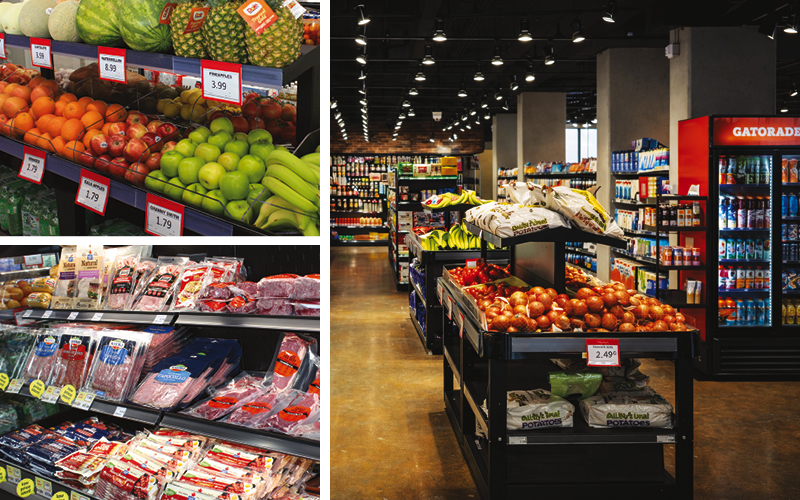
Most Hasty Market locations operate in footprints of 1,000 square feet or more, with the largest reaching approximately 4,000 square feet. With the introduction of beer and wine, the company has determined that 1,000 square feet is the minimum viable size to deliver sufficient assortment, drive meaningful sales, and achieve sustainable unit economics.
“It becomes increasingly difficult to meet customer expectations in locations below that threshold,” says Cini.
For Market On, the target footprint ranges from 2,500 to 4,000 square feet. The larger format supports expanded grocery, fresh food programs, meal solutions and alcohol offerings, all of which require sufficient space to merchandise effectively and profitably.
That footprint allows for a larger assortment, improved traffic flow and a more comfortable shopping experience, which contribute to larger basket sizes and stronger franchise returns.
“We’re not trying to build a bigger convenience store,” says Cini. “We’re building a convenient grocer where customers can complete a meaningful portion of their weekly shop in one visit.”
Balancing brand standards
One of the ongoing challenges in franchise models is balancing brand standards with local autonomy. Hasty Market aims to operate deliberately in that middle ground, recognizing that every community is unique.
“We work closely with our franchisees to ensure brand consistency, while encouraging them to allocate approximately 10 per cent of their product mix to items tailored to their local communities,” says Cini. “This balanced approach allows us to remain locally relevant while preserving a cohesive brand experience.”
That flexibility not only drives incremental sales but also fosters a stronger sense of ownership among franchise partners, empowering them to serve their neighbourhoods authentically rather than operating within a rigid, prescriptive model.
The company believes this balance helps deliver a consistent experience while staying closely connected to each community.
Strategic merchandising for local impact
Across Market On locations, approximately 65 per cent of sales come from core food and convenience categories, including grocery, produce, deli, snacks and hot meal replacements. The remaining 35 per cent is generated by lottery and tobacco, which historically have been important traffic drivers.
But that mix is shifting. Tobacco sales have been in steady decline for years, while fresh food and ready-to-eat categories continue to grow.
Cini says, “Our goal is to establish Market On and Hasty Market as reliable neighbourhood destinations for beer and wine, with a strong assortment that meets everyday needs.”
The company’s strategy goes beyond alcohol. Their main objective is to encourage customers to complete a meaningful grocery shop in their stores, from fresh produce and deli items to pantry staples and bakery offerings, rather than stopping in for a single-item purchase. Their focus is on building baskets, not just transactions.
“This shift positions us for sustainable growth and reinforces our role as a convenient grocer and community hub, not just a convenience store,” says Cini.
A franchise-driven future
Hasty Market operates a mix of licensed and franchised locations, however, its Market On banner is strictly franchised, with an immediate priority to scale across Ontario. Currently, three Market On stores are operating, one is under construction, and three additional franchisees are actively securing sites. From a site-selection perspective, the company prioritizes visibility, accessibility and strong community demographics.
“Scale must align with economic fundamentals,” says Cini. “In a retail environment where rent, labour and shrink pressures margins, the wrong footprint can sink a concept before it stabilizes.”
That disciplined approach extends beyond real estate.
“Our growth is intentional and measured,” says Cini. “We’re focused on refining our systems, strengthening brand consistency and ensuring operational excellence within Ontario before expanding further. Once we feel confident in our platform and scalability, we will begin exploring opportunities in other provinces.”
As expansion plans take shape, franchise selection remains a critical piece of the strategy. Scaling responsibly depends just as much on the right operators as it does on infrastructure.
“We look for franchise partners who bring an entrepreneurial mindset, are deeply customer-focused and share our commitment to building strong community connections,” says Cini. “Our stores are neighbourhood hubs, and the most successful franchisees are those who take pride in their locations, understand their local customers and are actively involved in their day-to-day operations.”
That community-first operating philosophy has sustained the company for the last 45 years and will shape its future.
As the convenience and carwash industry continues to evolve, the stores that thrive are those that understand their communities and deliver what their customers truly need. For Hasty Market, “More than a convenience store” is not just a tagline, it’s their blueprint for success.