



Hot Beverage Consumers Seek Customization Options
By Angela Altass
Coffee continues to hold the key to a successful hot beverage program with consumers increasingly seeking ways to customize their drinks.
An Agriculture Canada report notes that hot drink sales, at $4.5 billion in 2024, consist mainly of caffeinated coffee at 64.1 per cent, followed by caffeinated tea at 32.7 per cent, and other hot drinks, such as coffee mixes, fruit/herbal tea, at 3.2 per cent.
“For convenience retailers, the most successful hot beverage programs are the ones that deliver quality, variety, and a sense of personalization,” says Jon Theisen, general manager, Van Houtte Coffee Services. “A strong drip coffee program remains essential, offering reliability, simplicity and healthy margins. From there, operators are increasingly looking to build on that foundation with espresso-based beverages, which bring café-style quality into the convenience environment and help retailers meet rising consumer expectations. This also includes expanding beyond coffee into specialty teas, herbal infusions, and seasonal offerings.”
Coffee is hugely important for c-stores, says Robert Carter, president, Coffee Association of Canada.
“It continues to be the number one consumed beverage in Canada,” says Carter. “The volume of coffee consumption continues to increase so it should be a high priority for c-stores. There is a lot of innovation continuing to take place in the coffee industry, most notably we’re seeing continued increased interest for espresso-based beverages. We are now also starting to see fortified beverages, like protein-based coffee, rising in popularity.”
Coffee continues to offer great opportunity for convenience stores, says Carter, adding that a focus on transparency regarding country of origin and quality is important.
“Price is going to be a key area as we go through 2026,” says Carter. “The cost of beans is at a record high.” He stresses, however, that this shouldn’t deter retailers from offering quality coffee as “Canadian consumers are willing to pay for what they perceive to be good quality.”
There is a growing appetite for premium and specialty coffees, says Theisen.
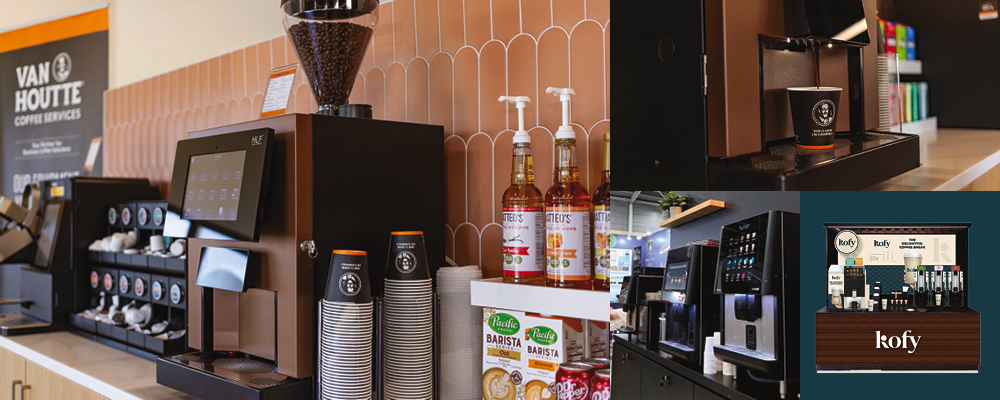
“Lattes, cappuccinos, and flavour-forward beverages are moving well beyond the café and many C&G operators are responding by investing in espresso and bean-to-cup machines that deliver a true coffee shop experience,” says Theisen, noting that Van Houtte recently expanded its hot chocolate lineup with new Hershey’s and Reese’s varieties and has also relaunched the Kofy coffee brand.
A shift toward health and wellness is also influencing the hot beverage category, says Theisen, noting a renewed interest in decaf, herbal teas and lower-caffeine choices.
“Tea-forward beverages, including those inspired by matcha or bubble tea, are gaining traction as Canadians embrace flavours and formats popularized by cafés and global hot beverage trends,” comments Theisen.
Tea consumption in Canada continues to grow steadily, with nearly half of Canadians drinking tea daily and overall per capita intake increasing as tea becomes the third-most popular beverage after coffee and tap water, says Shabnam Weber, president, Tea and Herbal Association of Canada.
“Health and wellness are major drivers, with Canadians increasingly choosing herbal, fruit-infused, and functional teas for antioxidants, digestive support, stress relief, and other benefits,” says Weber. “Tea is enjoyed throughout the day but for out-of-home consumption, the morning segment is still strongest for tea drinkers. Tea has popularity across all demographics but in different ways. Older consumers tend to lean towards more traditional teas whereas younger consumers are eager to experiment with varieties as well as flavours.”
Weber suggests that c-stores offer teas that customers are familiar with and have broad appeal, such as black tea, green tea, and a few herbals, such as lemon ginger or mint, which have no caffeine.
In today’s competitive landscape, the stores that win are the ones treating hot beverages as a strategic category rather than a routine offering, says Theisen, noting that when coffee is executed well, it lifts adjacent categories, from baked goods to grab-and-go snacks.
“Offering fairtrade or organic coffees helps retailers connect with consumers who want their everyday choices to reflect their values,” says Theisen. “Milennials and Gen Z in particular want beverages that reflect their preferences, making dairy alternatives, diverse sweeteners, flavour syrups, and iced coffee options increasingly important elements of a well-rounded station.”
Specialty coffee continues to grow at an incredible pace, says Daren Schwengler, president, Specialty Beverage Solutions. The company has introduced a new beverage machine from manufacturer Azkoyen that Schwengler says is focused specifically on convenience stores and offers a full menu of hot beverage offerings.
“Consumers are increasingly seeking higher-quality coffee experiences,” says Schwengler. “Variety is the most important thing operators need to offer today. The world has changed, with more allergies, more dietary restrictions, and more consumers choosing alternative milks. If the options aren’t there, customers will simply go elsewhere. Customers expect a better cup of coffee as the baseline. The days of watered-down, over-brewed convenience store coffee are long gone. If you want to stay relevant, you have to serve genuinely good drinks – no shortcuts and no excuses.”
Cleanliness of the coffee area and machines is paramount, says Schwengler.
“Nothing kills a coffee faster than an off-taste and customers can spot mold or bacteria instantly,” states Schwengler. “Worse than that, you never want a customer getting sick and tracing it back to your location. That’s a reputation killer you don’t recover from easily.”
Anyone who wants to be taken seriously as a coffee or hot beverage destination needs to deliver top-notch quality every single time, says Schwengler.
“Let’s be honest, when was the last time you had a truly great chai at a convenience store? For most people, the answer is probably never,” says Schwengler. “That’s not a problem – that’s an opportunity. If you want to bring people into your store consistently, top-notch machines, ingredients, and staff knowledge have to be priorities.”
Marketing is important and one area where convenience stores tend to leave money on the table, says Schwengler.
“A real challenge today is pay at the pump,” he states. “Customers fuel up and never come inside. So, why are we waiting for them? What if someone was sampling coffee right at the pump? Small cups, big impact. I’ve honestly never seen this done and that’s exactly why it would work. Imagine someone filling their tank, getting handed a plant-based cappuccino or latte, smiling, and thinking that was really good. That’s how habits start. Once someone comes in for a great drink, they’re far more likely to buy food, snacks, or anything else in the store.”
Hot beverages are a daily ritual for customers, notes Gage Johnston, marketing manager, Franke Coffee Systems.
“Beverages are a top reason for c-store visits,” says Johnston. “They also contribute meaningfully to foodservice sales and margins across all categories. Customization is critical in all markets as guests want more control over roast, flavours, and dairy options. Delivering on consistency, speed, and quality is important. Machines like the A600 and A800 Fresh Brew allow intuitive self-service, precise extraction, and cleaning cycles that reduce staff training needs and keep quality high at peak hours.”
Offering variety is essential, says Jeremy Poty, regional foodservice growth manager, Core-Mark Canada, noting that Core-Mark is launching a new program, My Daily Crave, with a focus on delivering high-quality coffee at an accessible price point.
“We continue to see strong consumer interest in customizable coffee options offered at an affordable price,” says Poty. “Consumers expect multiple options, different roasts, flavours, and beverage styles. Meeting consumer expectations comes down to delivering quality, consistency, and convenience. Customers want great-tasting beverages they can rely on, served quickly and with minimal effort.”
Although hot beverages may represent a relatively small portion in a store’s overall assortment, they play an outsized role in driving customer loyalty and repeat visits, says Poty.