




The Execution Gap in Retail Pricing – And How Electronic Shelf Labels Are Closing It
By Laing Henshall
When oil and gas prices move, freight and packaging costs follow, and those changes flow through to the price of almost everything on the shelf. Suppliers are also running promotions more frequently, adding another layer of time-sensitive pricing events that stores need to execute. For retailers managing tens of thousands of products, this means price changes that once happened occasionally now happen weekly or even daily.
This is not a new trend. During COVID, supply chain disruptions caused rapid shifts in supplier costs and product availability, and that pressure has never fully eased. There is little reason to expect it will anytime soon.
This shift has highlighted an operational constraint inside physical stores. Retailers can update prices instantly in pricing and merchandising systems, but the shelf itself still relies on paper labels that must be replaced manually. Each price change requires staff to print labels, walk the store, and replace tags one by one.
As the pace of price changes increases, this process becomes difficult to sustain. It is expensive, introduces errors, and often creates temporary mismatches between shelf prices and point-of-sale systems.
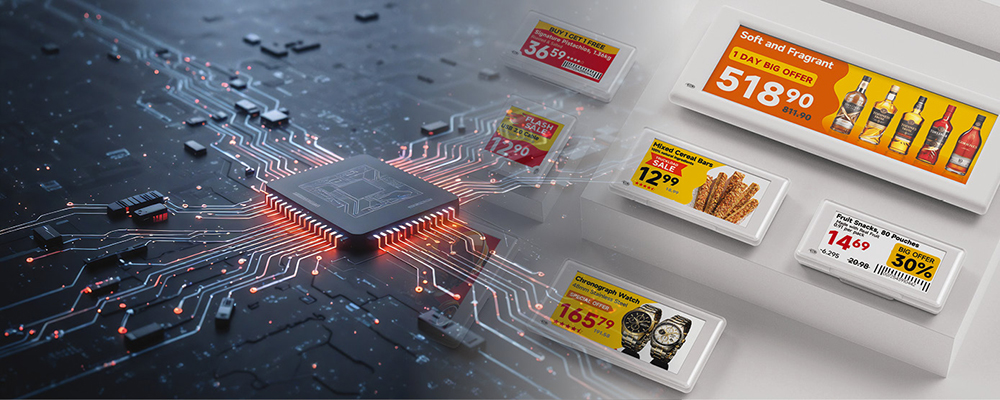
Retail has been increasingly turning to Electronic Shelf Labels (ESLs) to address this execution gap.
ESLs replace paper price labels with small digital displays mounted on the shelf edge. Modern ESL platforms integrate with POS systems, ERP platforms, inventory management tools, and pricing engines, allowing price updates to flow directly from central systems to store shelves. When a price is updated in the central system, the shelf tag updates automatically within seconds.
The scale of the problem is reflected in how quickly the investment pays off. Operators have reported getting their ESL investment back within 12 months. The returns come from multiple directions including savings from paper and printing, fewer pricing errors, better promotional compliance, enhanced picking and stocking using LED flash features, and improvements in the shopping experience.
The importance of ESLs is set to climb even further. Many retailers are now looking at analytics and artificial intelligence to support pricing decisions. AI-driven pricing systems can identify and execute optimal price adjustments across thousands of products faster than any manual process could support.
However, AI-driven pricing only works if the store environment can execute those decisions quickly and reliably. Without automation at the shelf, paper labels create a bottleneck between digital pricing decisions and the physical store.
ESLs remove that bottleneck by allowing prices to update instantly at the shelf, ESLs enable retailers to fully implement data-driven and AI-assisted pricing strategies across entire store networks.
Retailers are under more pricing pressure than ever. ESLs have quietly emerged as a solution to the gap between pricing decision and the shelf, which is why adoption is accelerating across every retail format.
Laing Henshall is an operating executive and lawyer with deep experience scaling retail technology businesses. He currently serves as president of Smart Label Solutions, where he leads ESL program deployments for major retailers across North America. Under his leadership, Smart Label Solutions has grown more than 10x over the past two years, expanding from a Canadian provider to a full-service ESL solutions company with offices across North America.
Prior to this, Laing spent over a decade in private equity as an operating partner across retail, ecommerce, and tech-enabled business services, holding CEO, COO, and General Counsel positions within portfolio companies.
Laing holds an MBA from London Business School, a JD from the University of Calgary, and a BA from Western University, and is called to the Bar of British Columbia.