
Cold and Frozen Beverages: Cool equipment, Hot Opportunity
By Meline Beach
The cold and frozen beverage category has moved well beyond a seasonal novelty to a year-round necessity for convenience and gas (C&G) retailers. From simple to sophisticated, today’s equipment and product offerings span the full spectrum – frozen carbonated beverages (FCB), frozen uncarbonated beverages (FUB) slush, smoothie stations, automated espresso and iced coffee systems, nitro cold brew on tap, soft serve, and sparkling water dispensers – to name a few. The right program can drive traffic, spark impulse sales, lift margins and help a c-store stand out in a crowded market.
Margins regularly average 65 to 80 per cent with iced coffee growing by double digits year over year, as consumers of every age reach for a frozen drink. For C&G retailers ready to explore the category or upgrade their current program, understanding the equipment landscape is a natural place to start.
Equipment Options
Western Refrigeration has been supplying the C&G channel for more than 35 years. What began as a focus on refrigeration, walk-in boxes and self-contained units, has grown into a full range of food service solutions, including FCB, FUB, milkshake and smoothie machines, fountain soda and iced coffee.
According to Chris Midbo, head of sales, marketing and new business development, a dispensed beverage program is a standalone offering that doesn’t require a food service program to succeed, especially FCB.
“Frozen carbonated beverages is one of the highest in-demand products for the consumer and the number one profit generator for a c-store,” says Midbo.
A basic FUB slush program starts at under $4,000, while an FCB unit runs under $20,000, with countertop and floor models available in low, medium and high capacity, ranging from two to four barrels. “We can match a program to the site needs and budget,” he adds. Western Refrigeration handles delivery, uncrating, placement, installation and training across Canada. A national toll-free line covers both warranty and post-warranty support.
TFI Canada has been partnering with top chains and independent operators in the C&G channel for more than 40 years, becoming a trusted resource for equipment, industry knowledge and service networks. Franke is a more recent addition to the C&G channel, with about 10 years in the space, and TFI’s representation of the brand has helped bolster operator confidence.
According to Judi Saliba, senior sales executive at TFI Canada, the Taylor Model 349C FCB (slush) has the broadest penetration across Canada of any frozen carbonated beverage machine, and a typical operational lifespan of 15 years, making this investment a sound long-term business decision. The Franke A800 and A1000 are best utilized for iced coffee.
“FCB offers the highest margin of any category in a c-store,” says Saliba. “Consumers don’t age out of the product offering, assuring generational consumption.”
For independent operators, TFI’s team helps retailers determine the most profitable solution for the store while their service teams handle installation, startup and training.
DSL Ltd. has been serving the Western Canadian market since 1916, with convenience retail an important part of that journey for close to 60 years. Their role has evolved from equipment supply to full-program support, including installation, training, service, OEM parts and long-term operational guidance.
DSL’s cold and frozen beverage portfolio for the C&G channel is led by Taylor, Franke and Flavor Burst add-on systems. Taylor equipment supports slush, frozen coffee, smoothies and soft serve, while Franke systems support premium iced coffee and specialty beverage programs. Franke’s modular design allows retailers to add an additional powder hopper, for a beverage like matcha, without bringing in a whole new machine. Flavor Burst add-on systems deliver up to eight additional flavours to an existing barrel without increasing store footprint.
“These are proven platforms for the channel, but they are also flexible and easy to use for promotions, limited-time offers and trend-driven beverage launches,” says Breanne Bannerholt, marketing manager at DSL.
The biggest trend DSL is tracking right now is the shift toward cold and iced specialty coffee. Many of their Franke customers are now pairing a countertop ice machine directly beside an automated espresso machine, so customers can build their own iced coffee.
Specialty Beverage (SB) Solutions has been serving the C&G channel for more than 20 years, with product lines that have evolved from drinkable soup, oatmeal and slush mixes in the early days, to the elevated product offerings including granita, real smoothies, nitro coffee and sparkling water drinks.
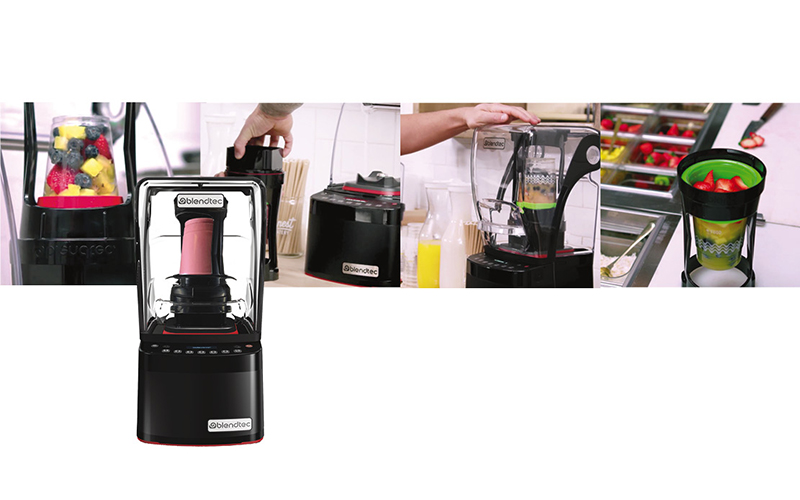
SB Solutions offers countertop Elmeco slush machines, made in Italy and recognized for producing some of the best slush available, along with Blendtec commercial blend-in-cup blenders, WatNitro for nitro cold brew on tap and WatWater for sparkling, flat and room temperature water dispensing.
“We are now offering elevated products that increase product quality and have amazing margins,” says Daren Schwengler, president of Specialty Beverage Solutions.
The Blendtec system is unique as it blends directly in the cup the customer takes with them and is well suited for full-service locations. WatNitro pumps nitrogen into coffee automatically, with no gas tanks required. New equipment across the category is also becoming more environmentally friendly, and consumers are seeking higher quality flavours and textures. Schwengler sees these trends as a real opportunity for c-store retailers. “Beverage is always key,” he says. “With or without food, a quality iced drink, made fast, will bring in customers.”
Site Assessment, Support and Maintenance
Choosing the equipment is only part of the decision. How you acquire it, where you put it, and how you support it operationally are what separate a program that performs well from one that is “out of order” often.
Each supplier stated they start with the store, not the machine, with a focus on location, customer demographics and competition in order to help identify the right equipment.
“We believe in understanding the current challenges and vision of our customers before presenting solutions,” says Bannerholt. “We help retailers build a program that is practical, scalable and suited to their operation, that will position them uniquely in the market and make them a destination.”
SB Solutions focuses on teaching the features and benefits of equipment alongside menu development, working with their own products as well as those from other suppliers. Additional key considerations include labour, staffing, cleaning expectations, counter space, store size and power requirements.
Midbo adds, “Don’t overlook the practical details. When you add a dispensed beverage program, you also need cups, lids and straws, and a place for those.”
On the maintenance side, the message from all suppliers is consistent: Don’t underestimate it, but don’t be intimidated either. Coffee equipment requires daily cleaning, while FCB equipment typically needs attention just a few times per year.
“Think of it like an oil change for your car,” says Midbo. “By following the manufacturer’s recommended schedule, you extend the life of the unit and minimize downtime.”
DSL’s after-sales support team includes over 70 factory-trained technicians carrying OEM parts on their trucks, no third-party service agents. “Uptime is critical because if the equipment is not running, it is not making money,” says Bannerholt.
TFI’s service network covers installation, startup, reactive repairs and customized preventive maintenance programs across Canada. Well-maintained equipment can last 15 to 20 years or more.
As for ROI, margins for FCB, slush and iced coffee sit at approximately 80 per cent, with equipment costs recoverable in as little as a year and a half from launch. A well-executed beverage program includes marketing, in-store or through social media. Retailers are also encouraged to observe what market leaders are doing and what the competition may be offering in the area – in order to compete at the best level possible. The best returns come when the program is simple, well merchandised, consistently available and easy for staff to maintain.
Buying, Leasing and Financing
Choosing how to acquire equipment is also important. Leasing is an increasingly popular option for independents, allowing operators to get into a program with limited money down. Because margins are strong, equipment can pay itself off relatively quickly.
Western Refrigeration offers leasing options designed to match the program to the operator’s budget, with margins strong enough that equipment commonly pays off in six to nine months depending on location and demographics. TFI offers equipment for purchase or through a third-party leasing company. SB Solutions works with DS Leasing on lease-to-own structures, where operators calculate the number of drinks per day needed to cover the payment. “There is only a small buyout at the end of the lease and the operator owns the equipment,” says Schwengler. Increasingly, retailers are also requesting quotes that include service and maintenance, a trend Schwengler sees as an encouraging sign for the long-term health of programs in the channel. Investment levels vary widely depending on store profile, volume and location type, ranging from as low as $1,500 up to $50,000, with options available for every size of operation.
A Retailer’s Point of View
Sometimes the most grounded perspective on a category comes from someone who is new to it. Janna Erichsen, owner of Ms J’s Convenience, purchased her c-store less than six months ago and considered a slush machine a non-negotiable from the start. She kept the machine from the previous owner used – a three-flavour self-serve Slush Puppy Canada unit rented seasonally for about $800 for the season including product. Space requirements are roughly three by four feet. The supplier handles cleaning at end of season. Staff involvement is minimal.
“High margins. Yes, worth the investment,” she says. Blue raspberry is the top seller. Erichsen rotates flavours through the season, and while she’s still building a full picture of ROI in her first year of operation, the category was a must-have in her view.
Her experience is a practical reminder that a cold beverage program doesn’t need to be complicated to be effective. A small footprint, a reliable supplier relationship, a self-serve format and a handful of well-chosen flavours can be enough to get started and enough to keep customers coming back.
The cold and frozen beverage equipment is better than it has ever been, the margins are real, and the consumer appetite for these beverages is only growing.
Meline Beach is a Toronto-based communications practitioner and frequent contributor to Convenience and Carwash Canada. In addition to freelance writing, Meline provides communications and public relations support to businesses across Canada. She can be reached at www.mlbcomms.ca.